
Abstract
High-grade serous ovarian cancer (HGSOC) is the most lethal gynecologic malignancy, typically affecting postmenopausal women. BRCA1 mutation carriers are at increased risk of developing early-onset disease. While bariatric surgery reduces the incidence of several obesity-related cancers, its potential impact on hormonally driven malignancies in genetically predisposed individuals remains unclear. We report a rare case of early-onset HGSOC in a 21-year-old woman with morbid obesity and type 2 diabetes who underwent Roux-en-Y gastric bypass in 2010. Following significant weight loss, she regained regular menstruation and discontinued insulin therapy. After progressive weight regain, she underwent revisional bariatric surgery in 2020. Three years later, she presented with an ovarian cyst and elevated tumor markers. Imaging suggested malignancy, and biopsy confirmed HGSOC with a BRCA1 mutation. The patient underwent optimal cytoreductive surgery followed by chemotherapy and commenced olaparib maintenance therapy. As of September 2024, she remains disease-free. This case raises the concern that bariatric surgery, by restoring ovulatory function and altering metabolic and hormonal balance, may unmask a latent susceptibility to cancer in genetically predisposed patients. The temporal association between metabolic surgery and early-onset ovarian cancer warrants further investigation into postoperative hormonal shifts and cancer surveillance strategies. Bariatric surgery in women with hereditary cancer syndromes should be approached with caution. Preoperative genetic counseling, multidisciplinary assessment, and long-term oncologic surveillance are essential to ensure patient safety.
Keywords: BRCA1 protein, ovarian neoplasm, bariatric surgery, obesity
INTRODUCTION
Ovarian cancer remains the most lethal gynecologic malignancy despite its relatively low incidence. Although breast cancer is typically diagnosed in postmenopausal women around age 63, carriers of BRCA1 mutations face a markedly increased lifetime risk and an onset approximately a decade earlier (, ).
The “incessant” ovulation theory, proposed by Fathalla (), remains central to ovarian carcinogenesis. Cumulative ovulatory exposure causes repeated epithelial microtrauma and DNA damage, which promote malignant transformation, whereas ovulation-suppressing factors such as pregnancy, lactation, or oral contraceptive use reduce ovarian cancer risk. Alongside ovulatory mechanisms, hereditary predisposition, particularly BRCA1/2-associated homologous recombination deficiency, plays a major etiologic role ().
Although obesity increases the risk of several hormone-related cancers, bariatric surgery typically reduces overall and obesity-associated cancer incidence (, ). Previous studies have rarely distinguished hormonally-driven tumors by menopausal status, receptor subtype, or hereditary syndromes, leaving uncertainty for genetically predisposed young women.
To our knowledge, no published case has described early-onset high-grade serous ovarian cancer (HGSOC) after bariatric surgery in a BRCA1 mutation carrier, despite literature supporting the key components of this clinical intersection: ovulation-based oncogenesis (, ), metabolic and hormonal shifts after bariatric surgery, and BRCA-driven susceptibility. We report a rare case of early-onset HGSOC in a young BRCA1-mutated woman after bariatric surgery, suggesting an interplay between genetic vulnerability and postoperative metabolic and reproductive recovery. summarizes relevant evidence and highlights this gap.
Table 1. Comparative literature table: Mechanistic and clinical evidence linking metabolic restoration, ovulation, and cancer risk
Mechanistic domain | Study | Key findings | Relevance to current case |
|---|---|---|---|
Ovulation-based ovarian carcinogenesis | Fathalla MF. 1971, Lancet () | The “incessant ovulation” hypothesis proposes that repeated rupture and repair of the ovarian epithelium cause cumulative DNA damage, increasing cancer risk in women with frequent ovulation. | Suggests that postoperative resumption of ovulation after rapid weight loss may re-expose the ovary to repetitive injury and oxidative stress, heightening malignant potential. |
Karst AM and Drapkin R. 2010, J Oncol () | A review of evolving models shows that high-grade serous carcinoma often originates from the fallopian tube fimbria. BRCA1 and BRCA2 mutations impair DNA repair, amplifying ovulatory injury. | Links BRCA1-related repair deficiency with ovulatory microtrauma, creating synergistic genomic instability after ovulation resumes. | |
Ovulatory recovery after bariatric surgery | Samarasinghe SNS et al., 2024, Lancet () | The BAMBINI randomized trial showed that bariatric surgery in women with polycystic ovary syndrome increased spontaneous ovulation more than twofold compared with medical therapy and produced concurrent metabolic improvement. | Demonstrates that bariatric surgery restores ovulatory cycles and hormonal activity, potentially reactivating ovulation-related carcinogenic stress in high-risk patients. |
Phan A et al., 2022, Ann Endocrinol () | A review showed improved fertility and menstrual regularity after bariatric surgery; however, rapid metabolic changes may transiently reduce ovarian reserve. | This suggests that metabolic recovery reactivates reproductive function, which—while beneficial for fertility—may increase ovulatory exposure in genetically predisposed women. | |
Bariatric surgery and overall cancer incidence | Wilson RB et al., 2023, Int J Mol Sci () | A meta-analysis of >500,000 patients found that bariatric surgery reduces overall and obesity-related cancer incidence but lacked subgroup analyses by sex, menopausal status, or hereditary factors. | This supports a general protective effect but reveals a methodological gap—genetic and hormonal subgroups (e.g., BRCA1 carriers) were not separately analyzed. |
Lim PW et al., 2024, JAMA Surg () | Review of longitudinal studies showing reduced risk of breast, endometrial, and ovarian cancer after bariatric surgery, though most studies exclude BRCA carriers and hormone receptor stratification. | Highlights that the protective effect of surgery may not extend to genetically predisposed women; metabolic restoration might unmask latent oncogenic susceptibility. | |
Paradoxical or heterogeneous effects in hormone-dependent cancers | Frederick A-L et al., 2021, Int J Epigenetics () | Obesity increases the risk of postmenopausal breast cancer but decreases the risk of premenopausal breast cancer by epigenetic modulation of estrogen- and progesterone-receptor signaling. | Indicates that obesity’s effects on hormone-dependent cancers vary by hormonal status; weight loss may reverse premenopausal protection. |
Atoum MF et al., 2020, Breast Cancer – Basic Clin Res () | A review of more than 2.5 million women found that higher body mass index reduces premenopausal breast cancer risk (approximately 8% per 5 kg/m² increase) via reduced ovulatory estrogen exposure. | Suggests obesity suppresses ovulatory estrogen activity; recovery of ovulation after surgery may increase susceptibility to hormone-dependent cancers. | |
Kim et al., 2018, Int J Epidemiol () | Prospective study of BRCA1/2 carriers: higher body mass index at age 18 associated with lower postmenopausal breast cancer risk. | Early-life adiposity may confer transient protection. Metabolic normalization following bariatric surgery could unmask genetic vulnerability. |
This case report follows the updated SCARE 2023 guidelines (). Institutional Review Board approval (no. 2501-112-1608) and written informed consent were obtained.
CASE REPORT
In June 2010, a 21-year-old female with severe obesity and uncontrolled diabetes was referred for bariatric surgery. She was 153 cm tall, weighed 103.6 kg [body mass index (BMI) 44.3], and had been on insulin since her diagnosis with Type 2 diabetes mellitus at age 13.
She began menstruating at age 11, but by 17, her cycles became irregular. An evaluation for suspected polycystic ovary syndrome (PCOS) revealed normal ovarian ultrasound findings but low progesterone levels. She began progesterone therapy in 2007; however, due to poor compliance, she experienced amenorrhea for over six years between ages 17 and 22.
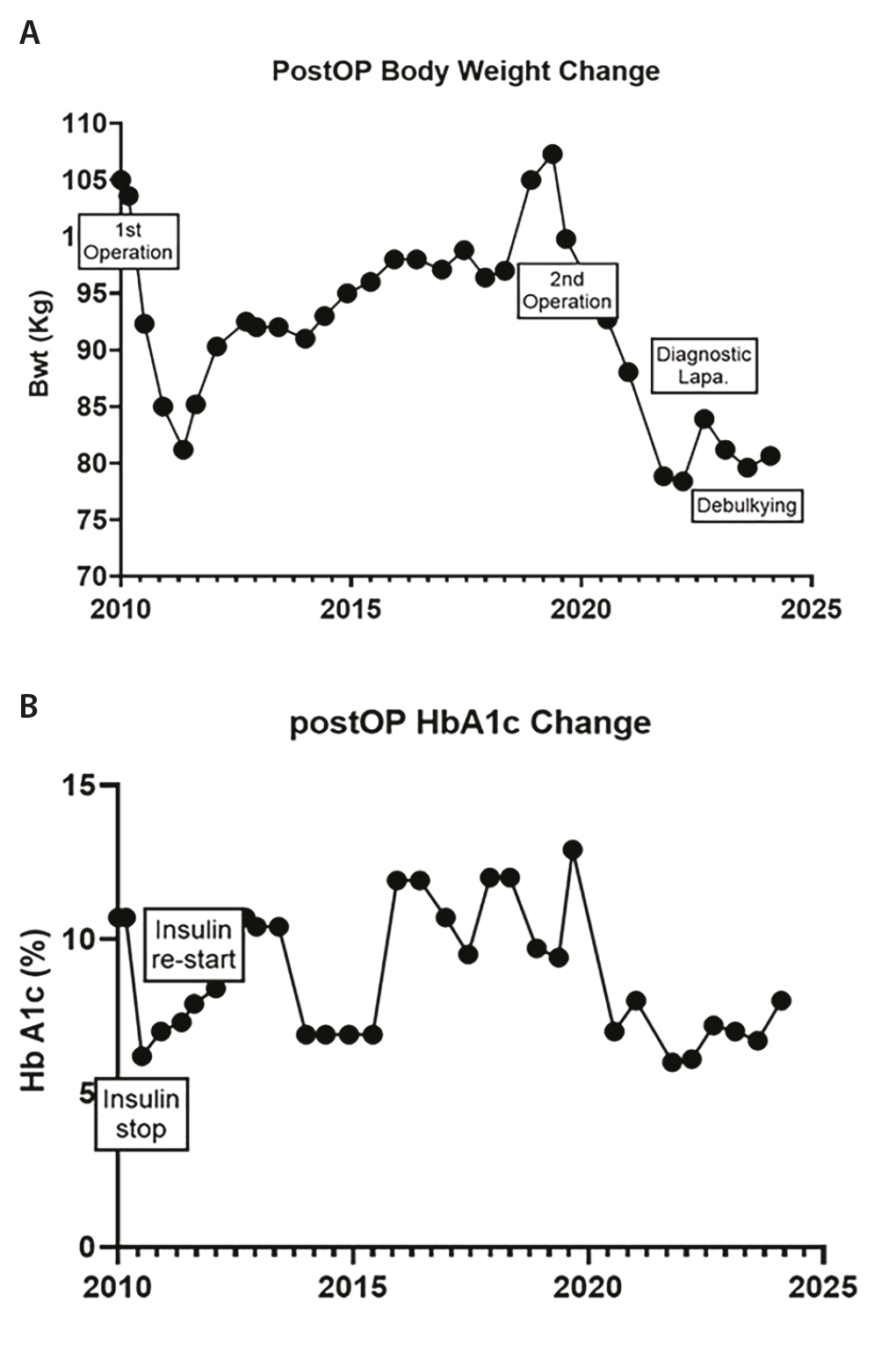
After undergoing laparoscopic Roux-en-Y gastric bypass in 2010, her BMI decreased to 34.9, and insulin therapy was discontinued within one year postoperatively. Along with postoperative weight loss, her regular ovulatory cycles resumed, and she maintained regular menstrual cycles with more than ten cycles per year for several years.
However, her weight gradually increased, and insulin therapy was reinitiated one year postoperatively. Ten years later, in 2020, her weight reached 114 kg (BMI 48.7), and higher insulin doses were required than before surgery.
An upper gastrointestinal series revealed fundal dilatation (). Due to concerns about cancer risk in the remnant stomach and the patient’s strong request, a revisional resection of the dilated fundus and remnant stomach was performed, reducing BMI to 33.5. Postoperative trends in weight and HbA1c are shown in .
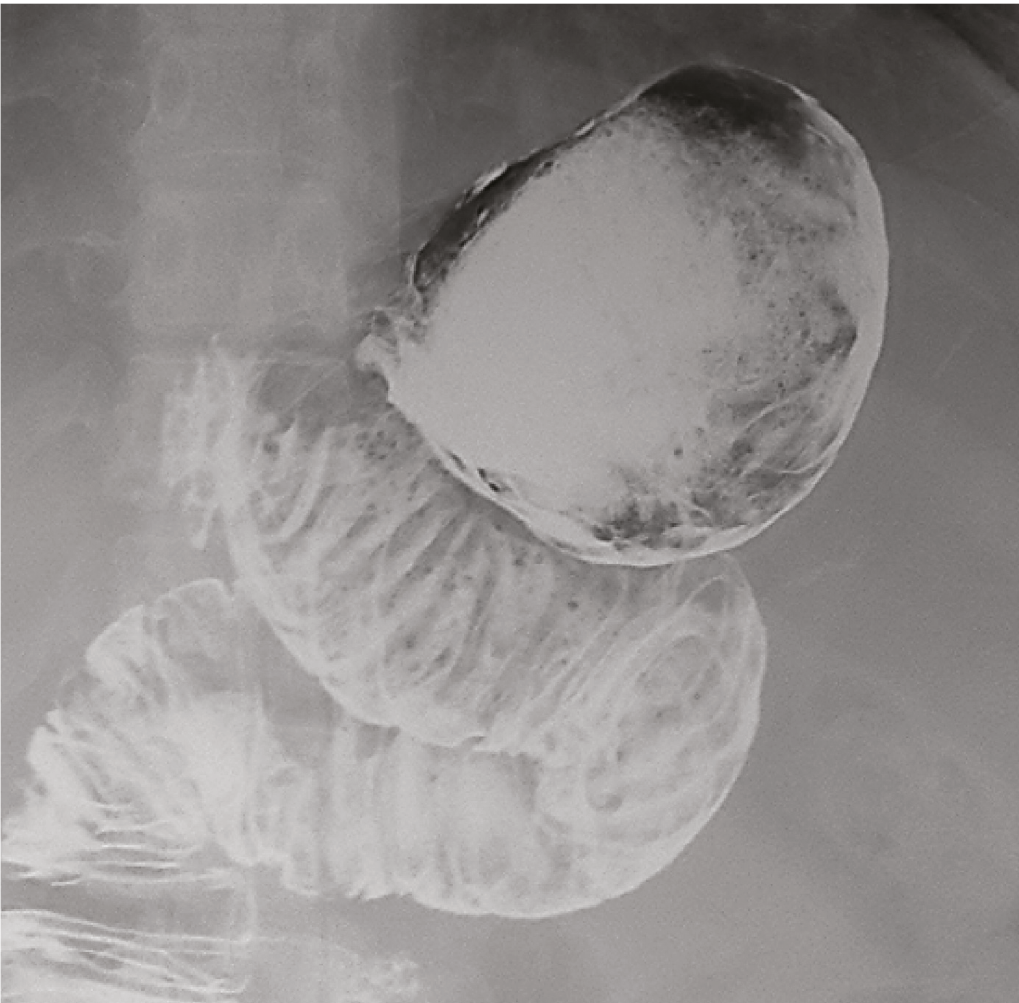
A contrast study demonstrated fundal dilatation of the remnant stomach following laparoscopic Roux-en-Y gastric bypass, which prompted revisional resection of the dilated fundus and remnant stomach.
In 2019, she was diagnosed with endometrial hyperplasia without atypia, and a levonorgestrel-releasing intrauterine device was inserted. Testing for Prader-Willi syndrome was negative. In 2023, an ultrasound revealed endometrial thickening, a 2-cm left ovarian cyst, and elevated tumor markers, prompting further evaluation. CT scans from 2021 and 2022 showed no significant findings, but computed tomography (CT) and positron emission tomography-CT scans performed in September 2023 revealed peritoneal seeding and nodal metastases ().
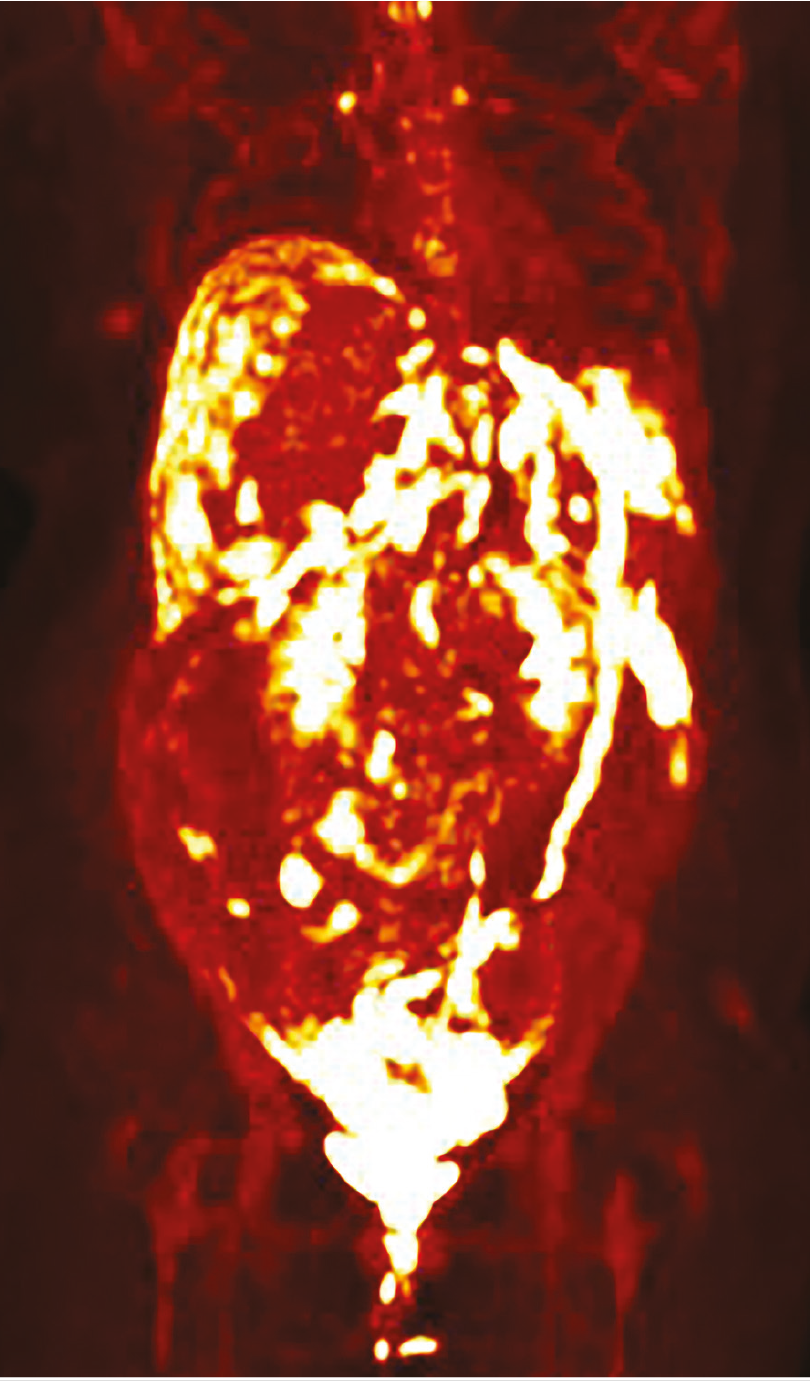
Whole-body FDG PET-CT shows hypermetabolic peritoneal implants and multi-station nodal metastases (including cardiophrenic and abdominal chains), findings compatible with metastatic high-grade serous ovarian carcinoma at presentation.
PET-CT: Positron emission tomography-computed tomograhpy, FDG: Fludeoxyglucose
The patient underwent left salpingo-oophorectomy and excision of a pelvic mass; biopsy confirmed HGSOC. In December 2023, she underwent complete cytoreductive surgery followed by six cycles of paclitaxel–carboplatin chemotherapy. Genetic testing confirmed a BRCA1 mutation, and she began olaparib maintenance therapy.
At the time of ovarian cancer diagnosis in September 2023, serum tumor markers were markedly elevated (CA-125: 8,451 U/mL, CA19-9: 35.2 U/mL, CA15-3: 57.6 U/mL, HE4: 365 pmol/L). Pathological examination of the left ovary and fallopian tube revealed HGSOC mainly involving the para-ovarian soft tissue and mesosalpinx, with capsular rupture and surface involvement. The excised bladder mass also showed involvement by carcinoma. Immunohistochemical staining demonstrated p53 overexpression, WT1 positivity, and PAX8 positivity, confirming the diagnosis of HGSOC. The disease was classified as International Federation of Obstetrics and Gynaecology stage IVB, and no macroscopic residual disease was observed after complete cytoreductive surgery.
The patient completed six cycles of paclitaxel-carboplatin chemotherapy followed by maintenance olaparib, achieving normalization of CA-125 and HE4 levels by mid-2024. As of September 2024, she remains disease-free. No known family history of malignancy was identified.
The chronological sequence of metabolic, reproductive, and oncologic events is summarized in .
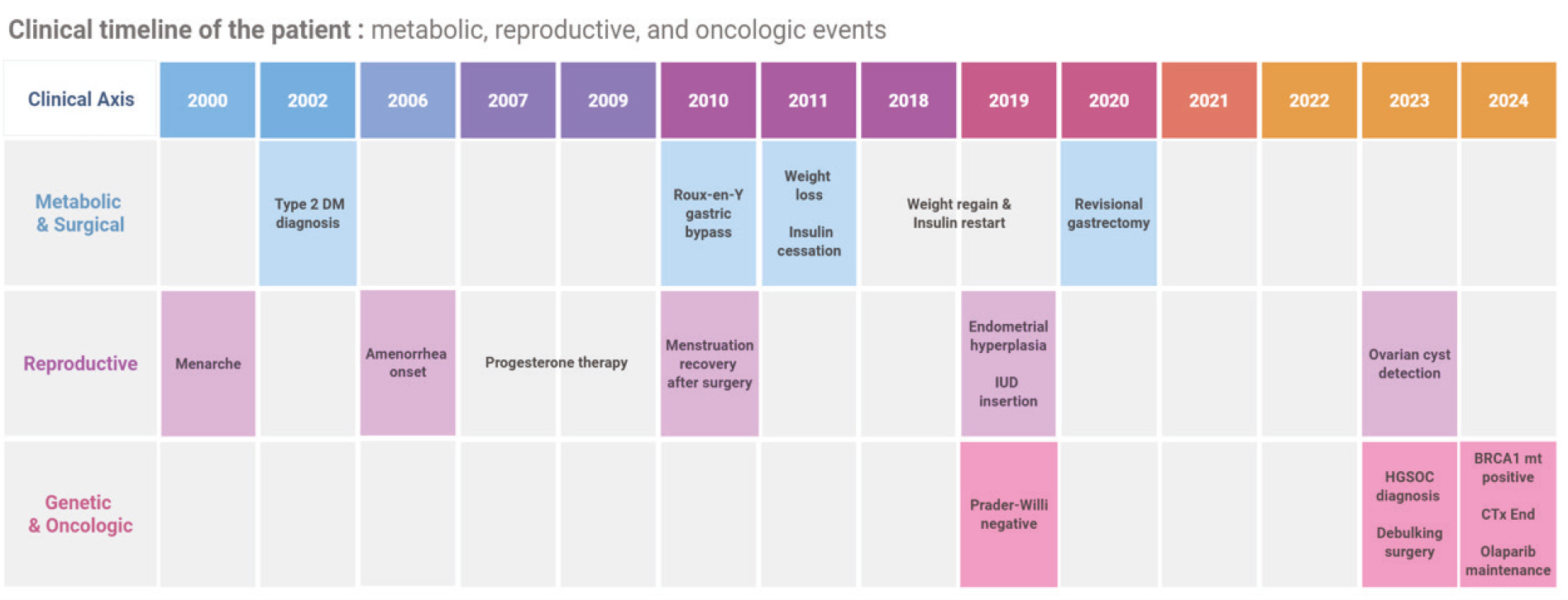
The patient’s clinical course illustrates the interplay between metabolic recovery, restoration of ovulatory cycles, and subsequent ovarian carcinogenesis in a BRCA1-positive carrier. The timeline highlights key interventions, including two bariatric surgeries (2010 and 2020), hormonal changes, endometrial hyperplasia, and the eventual diagnosis and treatment of high-grade serous ovarian carcinoma in 2023.
DISCUSSION
Ovarian cancer developing after bariatric surgery is rare, as weight loss typically reduces the risk of malignancy (, ). This case highlights a possible interaction among metabolic recovery, ovulatory restoration, and genetic susceptibility. While plausible, it remains hypothesis-generating rather than causal, since many BRCA1 carriers develop ovarian cancer independently of metabolic factors. This case serves as an example of mechanistic convergence rather than proof of causality.
Obesity, Weight Loss, and Cancer Risk
Obesity is an established risk factor for several cancers, particularly endometrial and postmenopausal breast cancer, due to hyperestrogenism, low-grade inflammation, and insulin resistance. Bariatric surgery reduces overall and obesity-related malignancy incidence by normalizing metabolic and hormonal parameters. However, most large-scale meta-analyses have not stratified patients by sex, menopausal status, or hereditary cancer risk, limiting their relevance to hormonally driven subgroups (, ). In contrast, studies on hormone-dependent malignancies, such as breast and endometrial cancers, reveal a paradoxical relationship with obesity (-). While obesity increases cancer risk after menopause, it appears to have an inverse association with premenopausal breast cancer, possibly due to hypothalamic-pituitary feedback that suppresses gonadotropin secretion and reduces ovulatory estrogen exposure. Weight loss may thus reverse this protective state and reactivate ovulation, potentially heightening susceptibility in BRCA1 carriers.
Ovulation and Ovarian Carcinogenesis
According to the “incessant ovulation” hypothesis proposed by Fathalla (), repeated ovulatory rupture and repair of the ovarian epithelium cause microtrauma and reactive oxygen species (ROS)–induced DNA damage, promoting genomic instability (). BRCA1 mutations exacerbate this by impairing homologous recombination (). Thus, in genetically predisposed women, continuous ovulation can serve as a facilitating, rather than an initiating, factor in carcinogenesis, synergistically increasing the likelihood of malignant transformation.
Ovulatory Recovery After Bariatric Surgery: Distinct Dynamics
In this case, postoperative weight loss restored regular ovulatory cycles, indicating normalization of endocrine function. However, the mechanism of ovulation recovery after bariatric surgery differs from the mechanism after gradual lifestyle modification in PCOS (, ). Lifestyle-induced weight reduction restores ovulation slowly by improving insulin sensitivity and androgen balance, whereas bariatric surgery induces abrupt metabolic and hormonal shifts that transiently elevate oxidative metabolism. This may transiently elevate ROS and inflammatory signaling and, in BRCA1-deficient cells, promote carcinogenic changes (, ).
Oxidative Stress and Long-Term Interval
During the early postoperative period, reduced oral intake and rapid weight loss, accompanied by enhanced fatty acid oxidation, are presumed to cause a transient increase in oxidative stress. Although the initial condition was self-limiting, our patient developed HGSOC over a decade later, suggesting that chronic ovulatory exposure and BRCA1 repair deficiency dominated the late transformation. Early oxidative stress may have served as an initiating promoter of low-grade genomic instability (). Mechanistically, this process may involve activation of the PI3K/Akt signaling pathway, which has been implicated in ROS-mediated carcinogenesis and BRCA1 dysfunction (). The Hypothesis regarding the interaction between ROS, BRCA1 mutation, and the PI3K/Akt1 pathway is illustrated in .
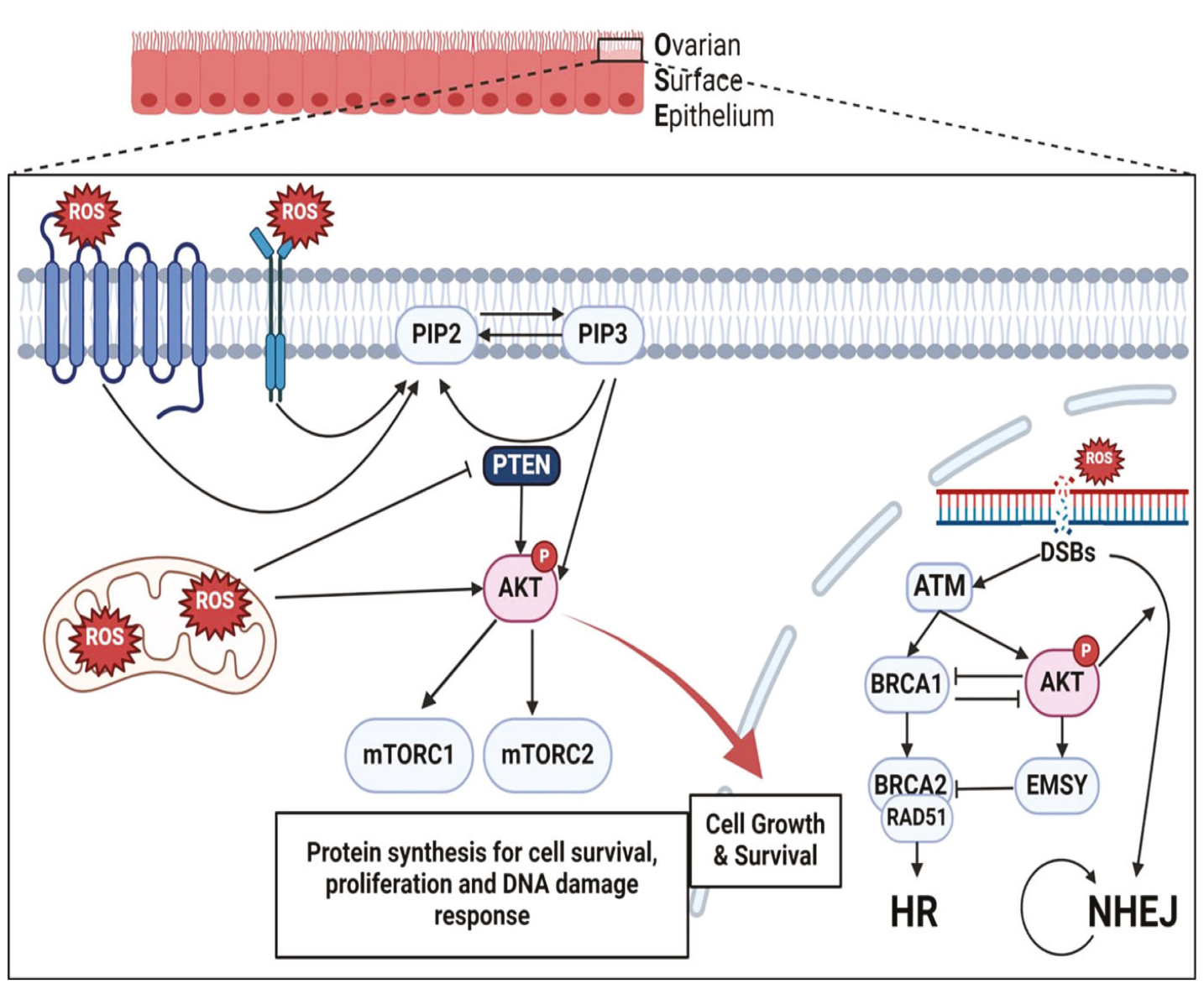
This schematic was created by the authors using BioRender.com and constitutes an original conceptual illustration synthesizing previously published literature.
Hypothesis: ROS, BRCA1 mutation, and PI3K/Akt1 pathway interactions.
ROS directly activates PI3K, which in turn activates AKT. Activated AKT promotes cell survival by inhibiting pro-apoptotic factors and further sustains proliferation through the mTOR pathway. Additionally, ROS can induce double-strand DNA breaks. DNA damage activates ATM, initiating homologous recombination (HR) repair through the BRCA1-BRCA2/RAD51 pathway. HR deficiency caused by BRCA mutations forces tumor cells to rely on alternative error-prone repair mechanisms such as non-homologous end joining (NHEJ), leading to genomic instability and carcinogenesis.
OSE: Ovarian surface epithelium, GPCR: G protein-coupled receptor, RTK: Receptor tyrosine kinase, ROS: Reactive oxygen species, PIP2: Phosphatidylinositol-4,5-bisphosphate, PIP3: Phosphatidylinositol-3,4,5-trisphosphate, PTEN: Phosphatase and tensin homolog, AKT: Protein kinase B, mTORC: Mammalian target of rapamycin complex, DSB: Double-strand break, ATM: Ataxia telangiectasia mutated, BRCA: Breast cancer gene, RAD: Radiation-sensitive protein, EMSY: BRCA2-associated protein, HR: Homologous recombination, NHEJ: Non-homologous end joining
Genetic Predisposition and Preventive Implications
In this patient, the BRCA1 mutation was identified only after the diagnosis of HGSOC, making preoperative preventive interventions impossible. Nevertheless, this case underscores the importance of identifying hereditary cancer susceptibility before bariatric or other metabolic surgeries. For women with known BRCA mutations, the primary determinant of ovarian cancer risk remains genetic predisposition rather than metabolic factors. Current guidelines recommend risk-reducing bilateral salpingo-oophorectomy after completion of childbearing, typically between the ages of 35 and 40. Until then, suppression of ovulation with oral contraceptives is recommended. However, in women who have undergone bariatric surgery, the absorption and efficacy of oral hormonal agents may be unpredictable due to altered gastrointestinal anatomy. Therefore, alternative preventive approaches, such as non-oral hormonal contraception (e.g., levonorgestrel intrauterine system), should be considered.
The potential risk-benefit balance must be carefully evaluated with individualized counseling. Preoperative genetic testing and multidisciplinary planning can optimize surgical timing, hormonal management, and surveillance strategies, particularly in women at increased hereditary risk for gynecologic malignancy.
This case underscores the need for heightened vigilance when performing bariatric surgery on women with potential hereditary cancer susceptibility, such as BRCA1 mutations. Although bariatric surgery offers metabolic benefits, its interaction with ovulatory recovery and DNA repair defects may modify its protective effects.
Preoperative genetic evaluation should be considered in young women with a family history of metabolic disease or with early-onset metabolic disease. For confirmed BRCA carriers, multidisciplinary counseling should guide surgical timing, fertility, hormonal planning, and surveillance planning. In such patients, ovulation suppression using non-oral hormonal options may serve as a temporary preventive measure until risk-reducing bilateral salpingo-oophorectomy is undertaken.
Ultimately, this case highlights the importance of individualized risk-benefit assessment and long-term follow-up after bariatric surgery, integrating metabolic, reproductive, and genetic perspectives to ensure both oncologic safety and metabolic success.
Footnotes
Ethics
Informed Consent: Written consent obtained from the patient.
Author Contributions
Concept - K.P., H.S.K., Y.M.C., C.H.S., H-J.L.; Design - K.P., H.S.K., Y.M.C., C.H.S., H-J.L.; Data Collection or Processing - K.P., J.C.K., S-H.K., J.K.; Analysis or Interpretation - K.P.; Literature Search - K.P., H-J.L.; Writing - K.P., J.C.K., S-H.K., J.K., H.S.K., Y.M.C., C.H.S., H-J.L.
Conflict of Interest: No conflict of interest was declared by the authors.
Financial Disclosure: The authors declared that this study received no financial support.
References
Surveillance epidemiology and end results program. Cancer Stat Facts: Ovarian Cancer Bethesda, MD: National Cancer Institute; 2024. Available from: https://seer.cancer.gov/.
Kuchenbaecker KB, Hopper JL, Barnes DR, Phillips KA, Mooij TM, Roos-Blom MJ, et al. Risks of breast, ovarian, and contralateral breast cancer for BRCA1 and BRCA2 mutation carriers. JAMA. 2017;317:2402-2416.
Fathalla MF. Incessant ovulation--a factor in ovarian neoplasia? Lancet. 1971;2:163.
Karst AM, Drapkin R. Ovarian cancer pathogenesis: a model in evolution. J Oncol. 2010;2010:932371.
Samarasinghe SNS, Leca B, Alabdulkader S, Dimitriadis GK, Davasgaium A, Thadani P, et al. Bariatric surgery for spontaneous ovulation in women living with polycystic ovary syndrome: the BAMBINI multicentre, open-label, randomised controlled trial. Lancet. 2024;403:2489-2503.
Lim PW, Stucky CH, Wasif N, Etzioni DA, Harold KL, Madura JA, et al. Bariatric surgery and longitudinal cancer risk: a review. JAMA Surg. 2024;159:331-338.
Phan A, Rives-Lange C, Ciangura C, Carette C, Dupont C, Levy R, et al. Bariatric surgery and human fertility. Ann Endocrinol (Paris). 2022;83:196-198.
Sohrabi C, Mathew G, Maria N, Kerwan A, Franchi T, Agha RA; Collaborators. The SCARE 2023 guideline: updating consensus Surgical CAse REport (SCARE) guidelines. Int J Surg. 2023;109:1136-1140.
Wilson RB, Lathigara D, Kaushal D. Systematic review and meta-analysis of the impact of bariatric surgery on future cancer risk. Int J Mol Sci. 2023;24:6192.
Frederick A-L, Racicot R, Liu Z. Paradoxical effects of obesity on pre‑ vs. post‑menopausal breast cancer: the epigenetic mechanisms (review). International Journal of Epigenetics. 2021;1:1-10.
Atoum MF, Alzoughool F, Al-Hourani H. Linkage between obesity leptin and breast cancer. Breast Cancer (Auckl). 2020;14:1178223419898458.
Kim SJ, Huzarski T, Gronwald J, Singer CF, Møller P, Lynch HT, et al. Prospective evaluation of body size and breast cancer risk among BRCA1 and BRCA2 mutation carriers. Int J Epidemiol. 2018;47:987-997.
King SM, Quartuccio SM, Vanderhyden BC, Burdette JE. Early transformative changes in normal ovarian surface epithelium induced by oxidative stress require Akt upregulation, DNA damage and epithelial-stromal interaction. Carcinogenesis. 2013;34:1125-1133.
Iqbal MJ, Kabeer A, Abbas Z, Siddiqui HA, Calina D, Sharifi-Rad J, et al. Interplay of oxidative stress, cellular communication and signaling pathways in cancer. Cell Commun Signal. 2024;22:7.
Xiang T, Jia Y, Sherris D, Li S, Wang H, Lu D, et al. Targeting the Akt/mTOR pathway in Brca1-deficient cancers. Oncogene. 2011;30:2443-2450.