
Abstract
Objective
Acute abdominal pain (AAP) is a leading cause of visits to the emergency department (ED) and is often a condition requiring immediate attention and timely management to prevent potentially serious complications like sepsis. Despite the importance of this topic, public knowledge about AAP and when to seek care remains underexplored, particularly among non-medical populations. This study aimed to assess public knowledge, attitudes, and practices regarding AAP, identify their sources of health information about the condition, and pinpoint barriers to seeking medical care in Jordan.
Material and Methods
A cross-sectional survey was conducted among Jordanian adults using a self-administered questionnaire that was developed after a thorough literature review, tested and validated in a pilot study. Convenience and snowball sampling methods were used to collect data, which were analyzed using descriptive and inferential statistics, including linear regression analysis to identify predictors of knowledge and attitudes.
Results
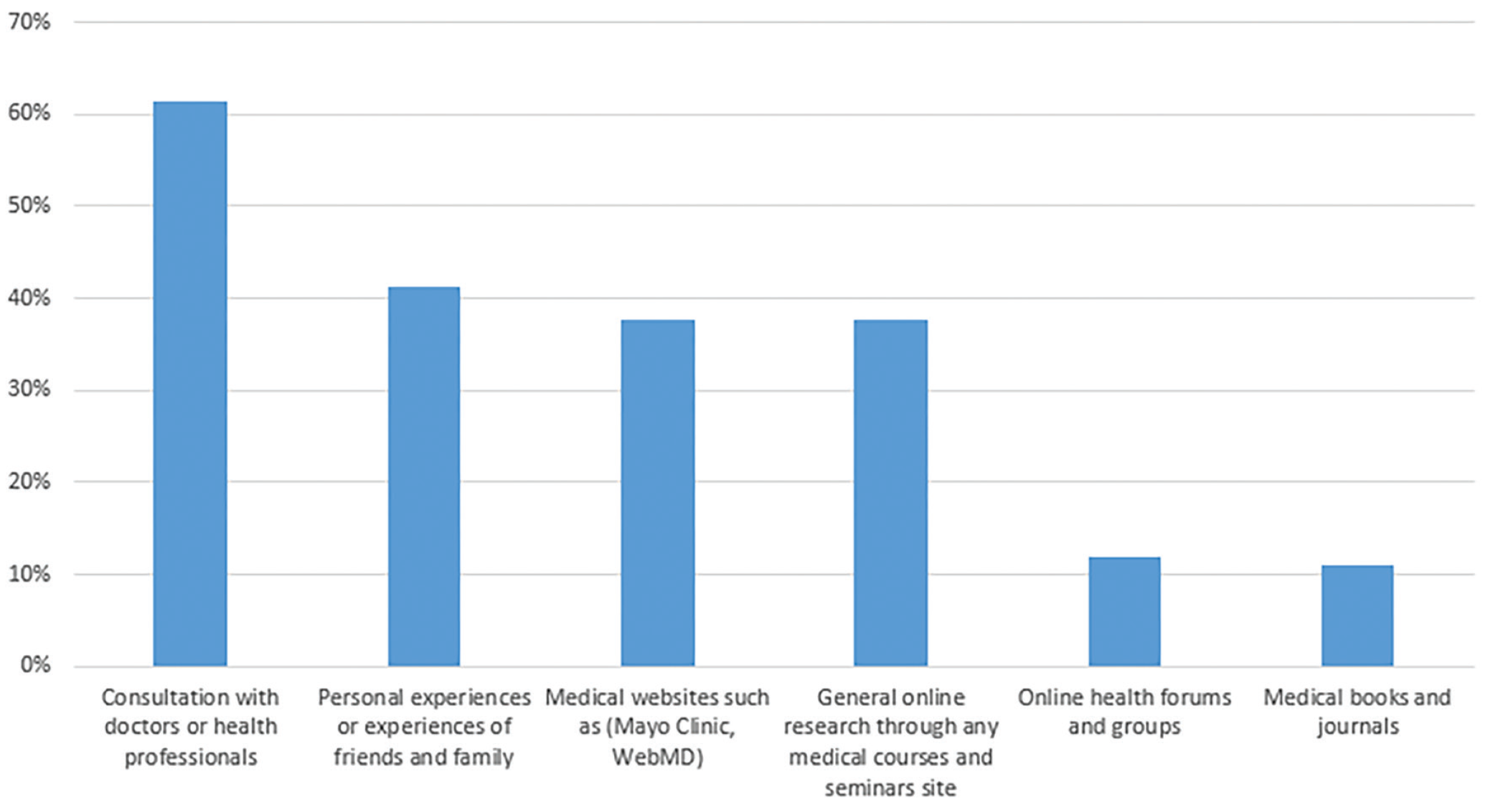
A total of 1.566 Jordanians participated in the study, with a median age of 26 years (interquartile range: 23-41). The most commonly perceived cause of AAP was the digestive system (86%), with changes in bowel habits (57%) and bloating (51%) being the most recognized associated symptoms. The mean knowledge score was 6.9±3.0, with most participants having fair (53.8%) or good (35.3%) knowledge scores. The vast majority (91.8%) had a positive attitude regarding the importance of raising and awarding about AAP, with a mean score of 7.89±1.66 out of 10. Age, female gender, marital status, parenthood, and prior abdominal surgery were positively associated with both better knowledge and attitude scores (p-values <0.05). However, when experiencing AAP, 35.5% reported that they would take painkillers and wait, and 30% would rest at home, while only 19.7% would seek medical help. Moreover, 4% stated that they would not seek care even in the presence of red flag symptoms. The main barriers to seeking care included long waiting times (47%) and lack of confidence in healthcare providers (31%). Regarding the sources of information about AAP, doctors and health professionals were the primary source of AAP knowledge (61%), followed by personal experiences and advice from friends and family (41%).
Conclusion
Most participants had fair to good knowledge and a positive attitude toward AAP, yet a significant proportion opted for self-management over seeking medical help. The main barriers to seeking care included long waiting times, and distrust in healthcare providers. Well-coordinated education campaigns and system-level interventions are advocated to overcome the existing barriers and improve outcome for AAP in Jordan.
Keywords: Acute abdominal pain, knowledge, attitudes, and practices, acute abdomen, public awareness, Jordan
INTRODUCTION
Abdominal pain is a general term that includes both acute and chronic discomfort in the abdomen and is one of the most common reasons for emergency department visits; it accounts for up to 10% of all emergency department visits (, ). Acute abdominal pain (AAP), on the other hand, refers to a sudden severe onset of pain typically lasting less than seven days, which often requires immediate medical attention to diagnose and manage potentially serious or life-threatening underlying pathology (), including infections, inflammation, vascular occlusion, bowel obstruction or perforation, hepatobiliary diseases, or referred pain from the lungs due to pneumonia, inferior myocardial infarction, or multiple other extra-abdominal causes that could “mimic” acute abdomen (-). Moreover, AAP must be approached in a time-sensitive manner to prevent severe potential complications such as sepsis, tissue necrosis or gangrene, fistula formation, and even death (). Despite advancements in the diagnostic approach to AAP, especially owing to the utilization of advanced imaging modalities such as computed tomography scans, the rate of initial misdiagnosis remains as high as 6% (-).
Public knowledge and awareness regarding AAP, including when to seek medical care, remain insufficiently explored, particularly among non-medical populations. A recent study from Saudi Arabia explored general public knowledge about AAP and revealed that the vast majority of the population involved had inadequate levels of awareness about the condition (). However, to our knowledge, no other studies have specifically addressed this topic within the Middle East Region.
This study highlights the importance of improving public awareness, attitudes, and practices related to the AAP while also identifying barriers that delay timely medical help and factors influencing healthcare-seeking behavior from the public’s point of view. By conducting a cross-sectional study among the Jordanian population, we aim to address these gaps and improve outcomes through early recognition and intervention.
MATERIAL and METHODS
Study Design and Study Population
This is an observational cross-sectional study among the Jordanian population conducted throughout November and December 2024. The present study followed the strengthening the reporting of observational studies in epidemiology statement guidelines from the enhancing the quality and transparency of health research network (), and the study’s protocol received approval from the Research Ethics Committee of the School of Medicine at Balqa Applied University (IRB number: 2025/2024/6/67, date: 24/02/2025).
The study’s inclusion criteria specified that participants must reside in Jordan, be over 18 years of age, and lack formal training or education in medical sciences. The exclusion criteria included individuals under 18 years of age, those currently working or studying in the medical field, and individuals who did not fully complete the questionnaire.
Study Sample and Data Collection
Assuming the Jordanian population to be 11,536,562, as reported by the Worldometer website, a reliable source for real-time statistics and demographic data across various domains (), the minimum required sample size was calculated as 385 via an online sampling calculator (OpenEpi) (), with the following parameters: A confidence level of 95%, a margin of error of 5%, and an assumed response distribution of 50%. However, we collected a significantly larger sample of 1566 participants.
To achieve a high response rate for the online questionnaire, the convenience sampling method was used. The survey was uploaded electronically to a Google form and distributed via social media platforms, both through personal outreach and public dissemination by data collectors. To prevent duplicate entries, participants were required to provide an email address linked to the form. Before data collection, all the participants were informed about the study’s purpose and assured of the voluntary nature of their participation. Electronic consent was obtained through a consent question at the beginning of the survey. The participants completed the survey anonymously at their convenience and did not receive any form of compensation for their participation.
Surveying Tool
The questionnaire was designed based on a comprehensive literature review and initially developed in English by a team of three medical professionals, including a general surgeon. It was then translated into Arabic by a professional translator, followed by back-translation into English by a different translator to ensure fidelity to the original content. The initial version of the questionnaire was validated for content validity by a panel of experts (including a general surgeon, a practicing physician, and a public health expert), and a subsequent pilot study was conducted to check for face validity, internal consistency, and reliability. This pilot study included an open-ended question for participants to provide feedback on the clarity and comprehensibility of the survey items. A total of 78 participants from the target population participated in the pilot study, and their feedback was used to refine and amend the survey instrument as needed.
The study included two primary scales: A knowledge scale and an attitude scale. The knowledge scale achieved a Cronbach’s alpha of 0.68, indicating acceptable reliability for exploratory research. The Spearman’s rho correlation coefficient between the two attitude-related questions was 0.83, indicating strong internal consistency. Data collected during the pilot study were excluded from the final analysis. The finalized version of the survey was presented in Arabic, the official language of Jordan ().
Our questionnaire consisted of seven sections and thirty-five questions. The demographic information included eleven items: Age, sex, marital status, geographical region, educational level, presence of children, medical background, history of abdominal surgery (including type), and experiences with misdiagnosis. General knowledge was evaluated through two questions addressing participants’ understanding of AAP-associated symptoms and underlying causes. The knowledge score section included 15 questions derived from a thorough literature review, with correct responses scored as 1 and incorrect responses as 0, resulting in total scores ranging from 0 to 15. Higher scores indicate greater understanding of the condition, categorized as poor (0-3), fair (4-7), good (8-11), or excellent (12-15). Attitudes toward the AAP were assessed via two questions addressing interest in the condition and perceived importance, with responses recorded on a 5-point Likert scale and summed to provide a total score of 10, where higher scores represented more positive attitudes. Practices explore initial actions taken after an AAP episode and the symptomatic threshold for seeking medical care. Barriers to seeking help were tested via multiple-choice questions, including concerns about transportation difficulties, long waiting times, lack of trust in healthcare providers, financial constraints, and others. Another question tested perceived barriers or reasons for avoiding direct surgical consultation, including fear of immediate surgery without confirmation, the time required to seek a surgeon’s opinion, etc. Finally, sources of information about AAP/abdominal pain were tested in another one of the multiple-choice questions, including options for consultations with doctors or health professionals, personal or shared experiences from friends and family, reputable medical websites (e.g., Mayo Clinic, WebMD), etc.
Statistical Analysis
The data analysis was conducted via JAMOVI (version 2.5) (). Descriptive statistical measures, including percentages, frequencies, means, and standard deviations, were used to summarize the participants’ demographic characteristics. Normality was assessed using the Shapiro-Wilk and Kolmogorov-Smirnov tests, which confirmed that the age, total knowledge and attitude scores did not follow a normal distribution. Consequently, non-parametric tests were used, and Spearman’s correlation was applied to examine the relationships between total knowledge and attitude scores and age. The Mann-Whitney U test and Kruskal-Wallis H test was used to analyze the associations with the other demographic characteristics. P-values ≤0.05 were considered statistically significant.
RESULTS
Socio-demographic Characteristics
A total of 1566 Jordanians, with a median age of 26 years (interquartile range: 23-41), participated in the study. Most of them lived in the middle region of Jordan, including the capital Amman, Zarqa, Balqa, and Madaba (979, 62.5%), and 70% (n=1104) were females lists the remaining socio-demographic characteristics of the participants in detail.
Table 1. Demographic characteristics of the study participants, n=1566
Demographic characteristics | n | % |
|---|---|---|
Age (mean, SD) | 31.5,11.8 | - |
Gender | ||
Male | 462 | 30.0 |
Area of residence | ||
North Region (Irbid, Ajloun, Jerash, Mafraq) | 554 | 35.4 |
Central Region (Amman, Zarqa, Balqa, Madaba) | 979 | 62.5 |
South Region (Karak, Ma’an, Tafila, Aqaba) | 33 | 2.1 |
Marital status | ||
Single | 866 | 55.3 |
Married (or previously married) | 700 | 44.7 |
Have children | ||
Yes | 610 | 39.0 |
Education level | ||
Below secondary education | 39 | 2.5 |
Completed secondary education | 202 | 12.9 |
Undergraduate degree (bachelor’s) | 1141 | 72.9 |
Postgraduate education | 184 | 11.7 |
Medical insurance coverage | ||
Yes | 1117 | 71.3 |
History of abdominal surgery | ||
Yes | 174 | 11.11 |
SD: Standard deviation.
Previous Abdominal Surgery
A total of 174 participants (11.11%) declared that they had previous abdominal surgery. In more details, these surgeries included in descending frequencies the following: appendectomy (41.95%, n=73), cholecystectomy (32.18%, n=56), bowel obstruction surgery (2.87%, n=5), perforated ulcer surgery (0.57%, n=1), intestinal volvulus surgery (1.15%, n=2), partial bowel resection (2.30%, n=4), and abdominal aortic rupture surgery (1.15%, n=2). Additionally, 19% (n=33) of them were identified as non-surgical cases (misdiagnosed) before undergoing surgery.
Knowledge
General Knowledge about the Causes and Symptoms Associated with AAP
With respect to the perceived causes of AAP among the included Jordanian population, the digestive system (86%, n=1346) was the most frequently reported cause, followed by the appendages of the digestive system (44%, n=689), urinary system (35%, n=548), muscular system (32%, n=501), and reproductive system (28%, n=438). Less frequently cited causes included the circulatory system (14%, n=219), heart disease (6%, n=93), and the respiratory system (4%, n=62). With respect to the symptoms identified by participants as associated with AAP, changes in bowel habits, including diarrhea or constipation (57%, n=892), bloating (51%, n=798), and muscle cramps in the abdominal wall (51%, n=798), were the most common. Other frequently reported symptoms included vomiting (43%, n=673) and nausea (42%, n=657), whereas loss of appetite (22%, n=344), rapid heart rate (17%, n=266), fever (15%, n=234), and dry mouth (8%, n=125) were less common.
AAP Knowledge Scale Results
The mean knowledge score was 6.9±2.47, with 53.8% (n=842) of the participants showing fair knowledge, 35.3% (n=552) good knowledge, 7.21% (n=112) poor knowledge, and 3.64% (n=57) excellent knowledge. Nearly half believed that the condition should always be approached as an emergency and that it might require emergency surgery (639, 40.8%). However, only 9.2% (n=144) considered consulting a surgeon in the emergency department as an initial step to be appropriate. presents the percentage of correct answers per question.
Table 2. Knowledge scores: detailed responses and percentages for each question, n=1566
- | Question | Correct answer | n | % |
|---|---|---|---|---|
1. | Please choose the correct statement from the following regarding the appropriate description of the levels of acute abdominal pain reported in the questionnaire. | 1) Acute abdominal pain means very severe and sudden pain | 653 | 41.7 |
2. | How should acute abdominal pain be treated according to your point of view: | 1) It should always be treated as an emergency to determine its causes and treat it | 639 | 40.8 |
3. | Where is the appropriate place to provide initial diagnosis and treatment for acute abdominal pain? | 4) Hospital emergency department (emergency physician consults general surgeon first) | 144 | 9.2 |
4. | Do you think that severe abdominal pain may require emergency surgery? | 1) Yes | 742 | 47.4 |
5. | Which of the following is a risk factor for developing severe abdominal pain that requires immediate medical attention? | 2) Previous abdominal surgery | 428 | 27.3 |
6. | Which of the following is a serious complication of untreated acute abdomen? | 2) Infection spread to blood (sepsis) | 510 | 32.6 |
7. | Which of the following conditions is not usually associated with an acute abdomen? | 1) Irritable bowel syndrome | 442 | 28.2 |
8. | What symptom might indicate a perforated peptic ulcer in a patient with an acute abdomen? | 2) Sudden, severe pain with abdominal wall stiffness | 915 | 58.4 |
9. | What is the most common cause of severe abdominal pain requiring emergency surgery in Jordan? | 1) Appendicitis | 920 | 58.7 |
10. | What is the treatment for acute appendicitis? | 2) Appendectomy | 1267 | 80.9 |
11. | Which of the following symptoms is a sign of gastrointestinal bleeding? | 1) Change in stool color to dark black | 1180 | 75.4 |
12. | In cholecystitis, where is the pain most often located? | 2) Upper right abdomen | 640 | 40.9 |
13. | Can angina (heart attack) present as severe abdominal pain? | 1) Yes | 736 | 47 |
14. | Which of the following symptoms might indicate intestinal obstruction as the cause of acute abdominal pain? | 4) All of the above | 941 | 60 |
15. | Pancreatitis usually presents as pain in which area? | 2) Pain in the upper abdomen extending to the back | 668 | 42.7 |
Knowledge Scores by Demographics
Age was weakly yet significantly associated with better knowledge scores (r=0.147, p<0.001), and females had significantly higher scores than males did (8.11±1.46 vs. 7.38±1.97, p<0.001). Moreover, married participants, parents and those who had undergone urgent abdominal surgery scored higher (p<0.001, p<0.001, p=0.008, respectively). Geographical region significantly influenced scores, after post-hoc analysis to identify specific differences, participants from northern Jordan scored higher those from middle Jordan did (p=0.017*), as demonstrated in and .
Table 3. Differences in attitudes and knowledge scores in relation to the basic demographic characteristics of the participants, n=1566
Variable | Attitude | Knowledge | |||||
|---|---|---|---|---|---|---|---|
- | - | Mean score (SD) | Test result | p-value | Mean score (SD) | Test result | p-value |
Agea | - | - | r=0.147 | <0.001* | - | r=0.113 | <0.001* |
Genderb | Males | 7.38 (1.97) | U=202851 | <0.001* | 6.10 (2.22) | U=187712 | <0.001* |
Females | 8.11 (1.46) | 7.25 (2.49) | |||||
Regionc | North | 8.08 (1.52) | χ²=8.38 | 0.015* | 7.16 (2.55) | χ²=7.67 | 0.022* |
Middle | 7.80 (1.73) | 6.78 (2.40) | - | - | |||
South | 7.70 (1.63) | 6.82 (2.80) | - | - | |||
Educational levelc | Below secondary educ. | 8.33 (1.24) | χ²=6.51 | 0.089 | 6.74 (2.37) | χ²=5.75 | 0.124 |
Secondary educ. | 7.94 (1.95) | 6.53 (2.36) | - | - | |||
Undergraduate | 7.86 (1.62) | 6.98 (2.50) | - | - | |||
Postgraduate | 8.00 (1.65) | 6.96 (2.42) | - | - | |||
Marital statusb | Single | 7.71 (1.74) | U=261156 | <0.001* | 6.75 (2.60) | U=272257 | <0.001* |
Married | 8.12 (1.53) | 7.11 (2.28) | - | - | |||
Do you have children?b | Yes | 8.15 (1.53) | U=247594 | <0.001* | 7.13 (2.24) | U=262997 | <0.001* |
No | 7.73 (1.72) | 6.77 (2.60) | - | - | |||
Previous abdominal surgeryb | Yes | 8.14 (1.49) | U=158531 | 0.008* | 7.01 (2.48) | U=232022 | 0.02* |
No | 7.84 (1.69) | 6.68 (2.44) | - | - | |||
Insuranceb | Yes | 7.87 (1.70) | U=247158 | 0.647 | 7.31 (2.42) | U=157718 | 0.007* |
No | 7.96 (1.56) | 6.83 (2.47) | - | - | |||
Misdiagnosis historyb | Yes | 7.91 (1.72) | U=4595 | 0.36 | 7.31 (2.42) | U=157718 | 0.257 |
No | 8.19 (1.45) | 6.83 (2.47) | - | - | |||
*: Indicates statically significant value at p-value <0.05, a: Spearman’s rho test, b: Mann-Whitney U test, c: Kruskal-Wallis test, SD: Standard deviation, χ²: Chi-square test statistic, r: Spearman’s correlation coefficient; U: Mann-Whitney U test.
Table 4. Post-hoc analysis of knowledge and attitude scores across geographical regions of Jordan: Dwass-Steel-Critchlow-Fligner pairwise comparison, n=1566
Attitude | - | Knowledge | ||
|---|---|---|---|---|
Comparison | W value | p-value | W value | p-value |
Geographical regions | ||||
North Jordan vs. Middle Jordan | -3.942 | 0.015* | -3.878 | 0.017* |
North Jordan vs. South Jordan | -1.855 | 0.389 | -1.256 | 0.648 |
Middle Jordan vs. South Jordan | -0.636 | 0.895 | -0.204 | 0.989 |
*: Indicates statically significant value at p-value <0.05.
Attitudes
Attitudes Scale Results
When asked about interest in learning more about AAP, 49% (n=767) expressed some level of interest, and 18% (n=283) were very interested (). Regarding the perceived importance of raising public awareness about AAP, 44% (n=688) agreed, while 41% (n=649) strongly agreed (). The mean attitude scores out of 10 was 7.89±1.66, with the majority (1438, 91.8%) showing a positive attitude (scores of 6-10) and only 8.2% (n=128) displaying a negative to neutral attitude (scores of 1-5).
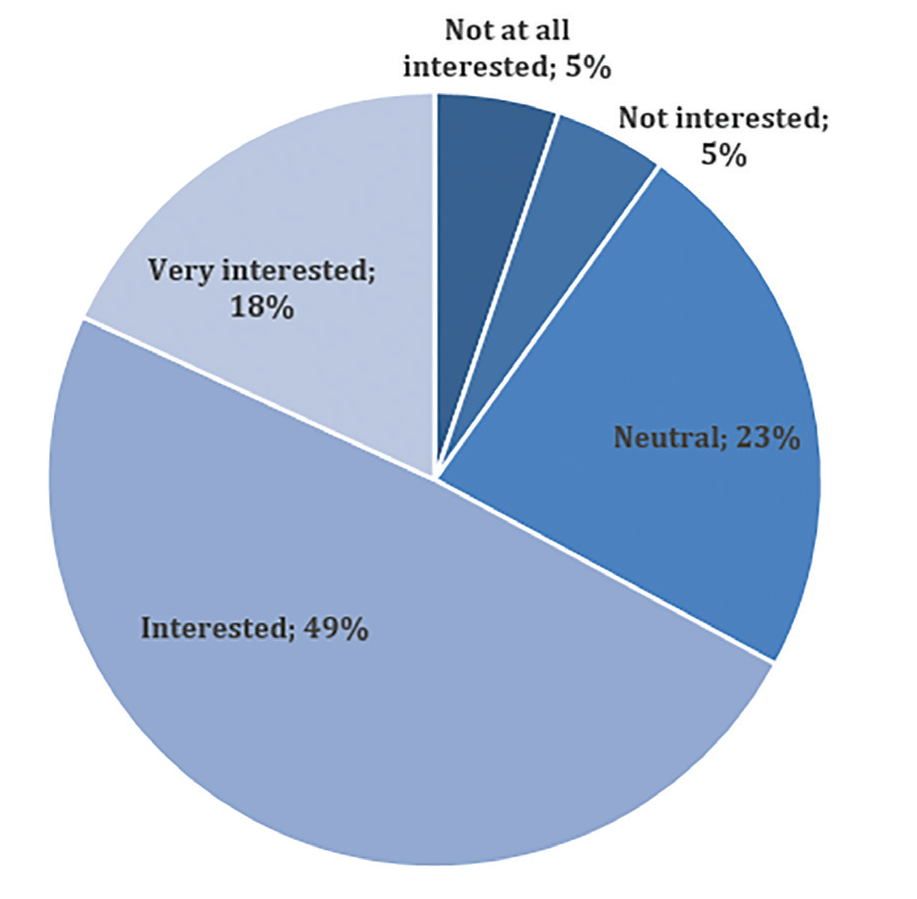
AAP: Acute abdominal pain
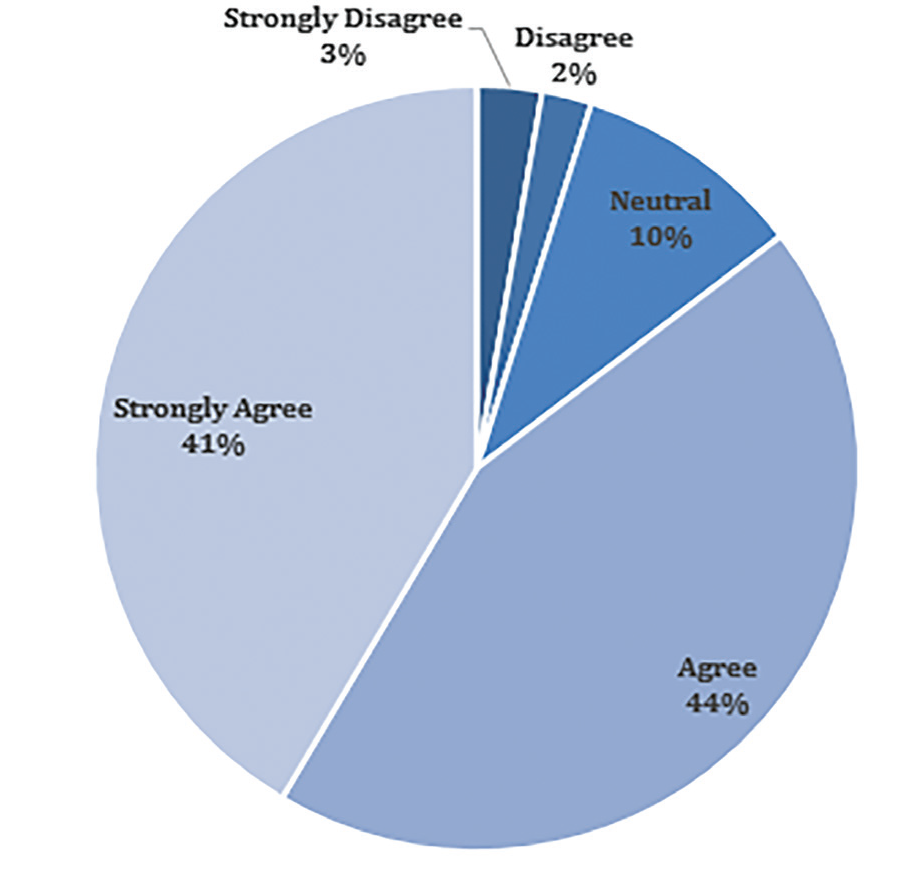
AAP: Acute abdominal pain
Attitude Scores by Demographics
Age was positively correlated with attitude (r=0.147, p<0.001). Gender differences were significant, with females scoring higher than males (p<0.001). Married individuals, parents, and those who had previously undergone abdominal surgery scored significantly higher scores (p<0.001, p<0.001, and p=0.0008, respectively), as illustrated in .
Correlation Between Knowledge and Attitude Scores
A moderate positive correlation was observed between knowledge and attitude scores (r=0.239, p<0.001), suggesting that higher knowledge scores are associated with more positive attitudes toward raising awareness about AAP.
Predictors of Knowledge and Attitude Scores
Using linear regression analysis, when compared to males, females had significantly higher knowledge scores (Estimate =1.079, p<0.001) and attitude scores (Estimate =0.704, p<0.001). In addition, participants from northern Jordan had higher attitude scores compared to those from southern Jordan (Estimate =-0.336, p=0.247) and middle Jordan (Estimate =-0.219, p=0.013), .
Table 5. Predictors of knowledge and attitude scores using linear regression analysis, n=1566
- | Knowledge | - | - | Attitude | - | - |
|---|---|---|---|---|---|---|
Predictor | Estimate | 95% CI | p-value | Estimate | 95% CI | p-value |
Gender | - | - | - | - | - | - |
Female-male | 1.079 | (0.813, 1.345) | <0.00* | 0.704 | (0.525, 0.883) | <0.001* |
Area of living | - | - | - | - | - | - |
Middle Jordan–North Jordan | -0.183 | (-0.442, 0.075) | 0.164 | -0.219 | (-0.393, -0.046) | 0.013* |
South Jordan–North Jordan | -0.246 | (-1.092, 0.600) | 0.569 | -0.336 | (-0.904, 0.233) | 0.247 |
Education | - | - | - | - | - | - |
Completed secondary education–Below secondary education | -0.255 | (-1.083, 0.573) | 0.545 | -0.442 | (-0.998, 0.114) | 0.119 |
Undergraduate degree–Below secondary education | 0.116 | (-0.662, 0.894) | 0.770 | -0.517 | (-1.040, 0.005) | 0.052 |
Postgraduate education–Below secondary education | -0.104 | (-0.942, 0.735) | 0.809 | -0.539 | (-1.102, 0.025) | 0.061 |
Marital status | - | - | - | - | - | - |
Single–Married | -0.162 | (-0.670, 0.346) | 0.532 | -0.106 | (-0.447, 0.235) | 0.544 |
Children | - | - | - | - | - | - |
No–Yes | -0.144 | (-0.667, 0.378) | 0.588 | -0.269 | (-0.620, 0.082) | 0.133 |
Medical insurance | - | - | - | - | - | - |
No–Yes | -0.226 | (-0.495, 0.044) | 0.101 | 0.173 | (-0.009, 0.354) | 0.062 |
Previous abdominal surgery | - | - | - | - | - | - |
No–Yes | -0.311 | (-0.643, 0.021) | 0.066 | -0.103 | (-0.325, 0.120) | 0.366 |
*: Indicates statically significant value at p-value <0.05, CI: Confidence interval.
Practices
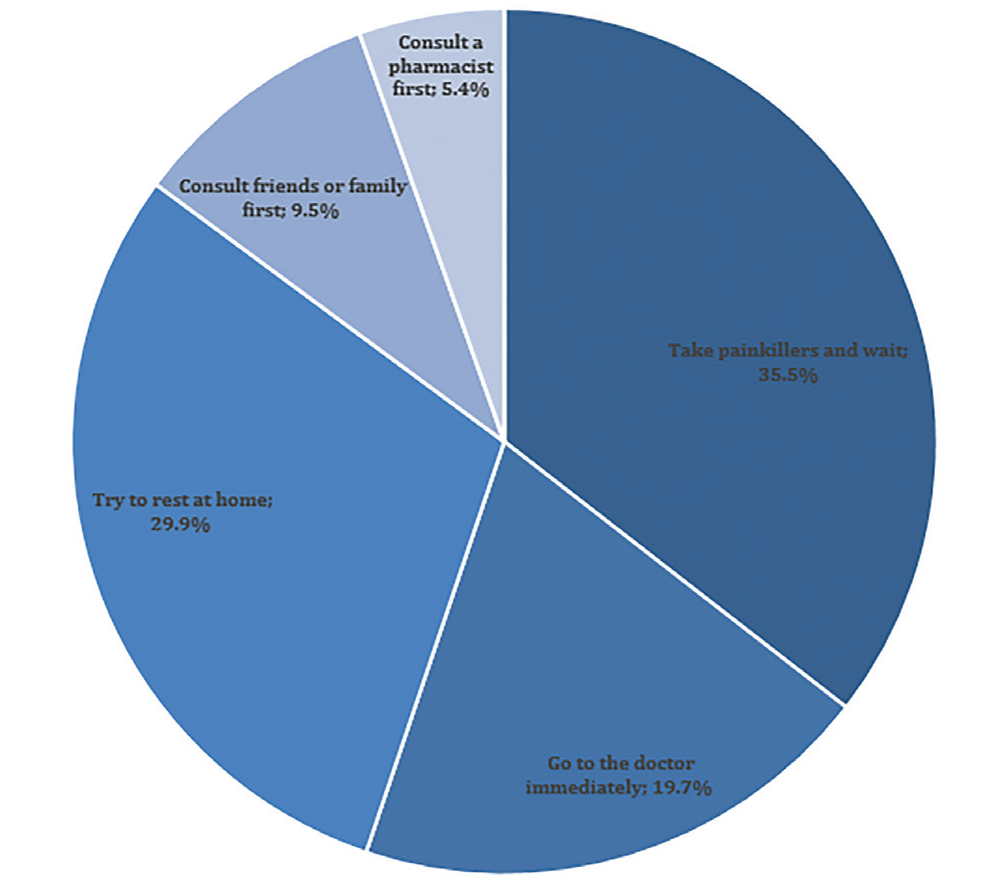
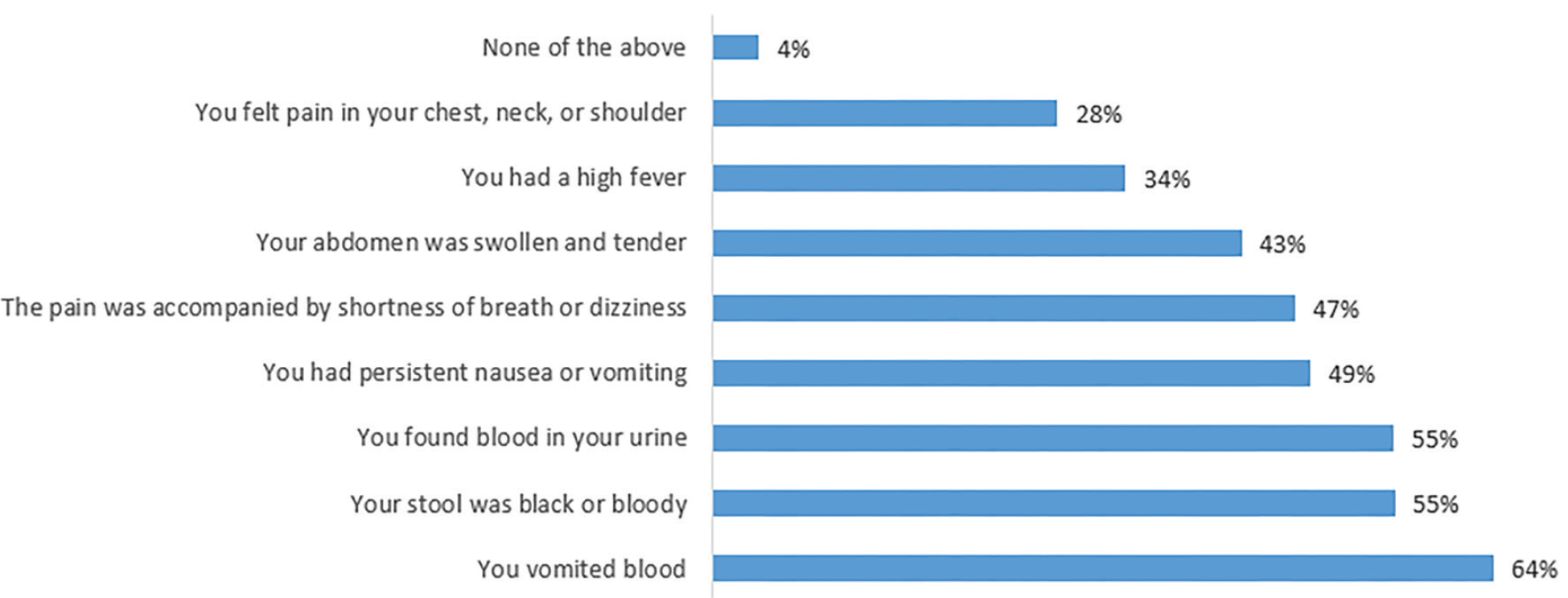
Regarding the initial steps that would be taken if experiencing AAP, 35.5% (n=556) of the participants reported that they would take painkillers and wait, 30% (n=470) would rest at home, and only 19.7% (n=309) would seek medical help (). The participants were also asked about the thresholds and symptoms that would prompt them to seek medical care; more than a half reported that they would seek urgent medical care if their symptoms were associated with bleeding, for example, vomiting blood (64%, n=1002), and only 4% (n=63) reported that they would not seek care for any of the red flag symptoms listed ().
Barriers to Seeking Medical Attention
Concerns regarding consulting a surgeon as an initial step in the emergency department in cases of AAP were commonly reported by participants. The most common concern, cited by 45% (n=705), was the fear of having surgery performed immediately without confirmation (). The barriers to seeking medical care in general in the case of facing AAP attacks were variable among participants. The most commonly cited concern was waiting times, reported by 47% (n=736), followed by a lack of confidence in healthcare providers’ ability to manage AAP (485, 31%) ().
Table 6. Perceived barriers to consulting a surgeon for acute abdominal pain, n=1566
- | n | % |
|---|---|---|
1) Fear of having surgery done directly without confirmation. | 698 | 45 |
2) Asking for a surgeon’s opinion takes longer. | 295 | 19 |
3) The decision to see a surgeon is up to the doctor who evaluated the case, and I have no right to discuss it. | 296 | 19 |
4) All cases of acute abdominal pain do not need to be evaluated by a surgeon, but by an internist first. | 412 | 26 |
5) A surgeon is not asked to perform surgery unless the internist or emergency physician decides to do so. | 341 | 22 |
6) I don’t know. | 315 | 20 |
Table 7. Barriers to seeking immediate medical care for acute abdominal pain, n=1566
Barrier | n | % |
|---|---|---|
1) Transportation problems: Difficulty accessing transportation to get to the medical facility. | 318 | 20 |
2) Waiting times: Concern about long waits at medical facilities. | 738 | 47 |
3) Trust in healthcare providers: Lack of confidence in healthcare providers’ ability to effectively manage acute abdominal pain. | 485 | 31 |
4) Financial constraints: Concern about medical costs. | 469 | 30 |
5) Previous negative experiences. | 327 | 21 |
6) Lack of information: Not enough information about where to seek medical care. | 332 | 21 |
7) Fear of side effects of treatment: Concern about possible side effects of proposed treatments. | 528 | 34 |
n: Number of participants.
Sources of Knowledge
When asked about their main source of information regarding AAP, the majority (955, 61%) relied on consultation with doctors or health professionals ().
DISCUSSION
This research included 1.566 Jordanians, with a median age of 26 years, the majority of whom were females (70%) and residents of the middle area of Jordan (62.5%). The mean knowledge score for AAP and its causes was 6.9±2.47 out of 15. The attitude levels were predominantly cautious, with a mean score of 7.89 out of 10. The participants prioritized rest or self-medication but would seek urgent care for severe symptoms such as vomiting blood or bloody stools. Most participants feared immediate surgery without confirmation of cause if surgical consultation was sought before an internal medicine doctor evaluated the presenting complaint. Barriers to seeking medical help are variable, with long waiting times being the most reported. A moderate positive correlation was found between knowledge and attitude scores, indicating that greater knowledge fosters better attitudes toward AAP awareness and care. To our knowledge, this is the first study to address these issues combined.
There is no conclusive evidence of the lifetime risk of intra-abdominal surgery; however, a study from North America in 2009 reported a prevalence between 8.2 and 29.1 for the population between 21 and 61 years old (). In our study, 11.11% of participants had previously undergone abdominal surgery, falling within the same range, with appendectomy being the most commonly reported surgery, which is the most common type of abdominal surgical emergency, with a lifetime risk of 7-9% (, ).
Among the enrolled Jordanian population, 35.5% had fair knowledge levels about AAP, which is significantly greater than the level of knowledge about AAP among the Saudi population, where 87.2% had poor knowledge scores (); this could be attributed to differences in the knowledge scales used. The scale used in the Saudi study consisted of a concise 5-question scale, potentially limiting its ability to capture comprehensive knowledge about AAP, whereas our study used a broader and more detailed scale. Second, cultural and educational differences are likely to play a role. Demographic factors influenced knowledge scores, with age showing a weak positive correlation and female sex scoring higher. In Jordan, women’s traditional role as household caregivers may enhances their awareness of conditions such as the AAP, whereas older participants may benefit from greater life experience with health issues. Conversely, in Saudi Arabia, males and younger participants had higher knowledge levels (), possibly because of cultural norms and younger individuals’ better access to online health resources (). Compared with adults without children, parents also had better levels of knowledge, probably because becoming a parent often leads to increased interactions with healthcare systems, which can enhance health literacy and awareness of various medical conditions. Additionally, participants who had insurance had better knowledge scores, which was suggested in a recent study, indicating that health insurance literacy plays a crucial role in facilitating the effective use of healthcare services, including primary care and preventive care (). Reasonably, a history of previous abdominal surgery led to significantly better knowledge scores, as undergoing abdominal surgery often involves preoperative and postoperative education, interactions with healthcare professionals, and firsthand experience with abdominal symptoms, all of which can contribute to a heightened awareness of abdominal health.
The vast majority of the population (91.8%) demonstrated a positive attitude toward the importance of raising awareness about the AAP, with a mean score of 7.89 out of 10, indicating widespread recognition of the topic’s significance. Factors such as age, being female, parenthood, residing in northern Jordan, and a history of abdominal surgery positively influenced attitudes, likely for reasons similar to those enhancing knowledge scores. This finding is further supported by the moderate positive correlation observed between knowledge scores and attitude scores.
Notably, only 19.7% of participants reported that they would seek medical help immediately if facing an episode of severe AAP; on the other hand, the majority of participants would rest at home or take painkillers and wait, but this may be appropriate if facing mild abdominal discomfort. In cases of AAP, serious underlying pathology is a considerable possibility, and timely evaluation and diagnosis are critical for appropriate management and avoiding life-threatening complications (). This was previously reported in a study from the United States on factors associated with delayed health care seeking in cases of acute appendicitis; many individuals perceive their abdominal pain as mild or self-limiting, leading them to choose rest or over-the-counter pain relief instead of consulting a healthcare provider ().
Our findings reveal critical gaps in participants’ health-seeking behavior, particularly in recognizing and responding to serious or life-threatening symptoms. While the majority (61%) reported that they would seek medical attention for symptoms explicitly associated with trauma or visibly alarming conditions (e.g., vomiting blood or blood in stool/urine), less than half acknowledged the need for care and apparently underestimated the need for escalation when experiencing other red flag symptoms such as shortness of breath, dizziness, swollen and tender abdomen, persistent nausea/vomiting, or high fever.
Moreover, the fact that 4% of the participants avoid seeking care for any symptoms is alarming, indicating that the majority recognized the importance of medical intervention in at least some circumstances but that a percentage avoided seeking medical help despite highly alarming symptoms.
The fear of having surgery performed immediately without thorough confirmation, reported by 45% of participants, reflects significant anxiety about the surgical process, which is almost identical to the findings of a study on the global pooled prevalence of preoperative anxiety among 14,000 surgical patients, where preoperative anxiety was reported to be 48%. Addressing this issue requires better public education on the step-by-step evaluation process and collaborative decision-making between surgeons and patients (). Moreover, a study among the Saudi population reported the same prominent concern about consulting a surgeon for their condition, reported by 32.1% of their sample. This is supported by our findings that 26% of the participants preferred initial consolation by an internist, rather than a surgeon, regardless of the underlying context of the abdominal pain.
People with AAP have reported facing multiple barriers that prevent them from seeking medical help. Longer waiting times to receive care are a rising global concern that could delay diagnosis and treatment, leading to increased all-cause mortality (, ); it was reported as a concern by almost half of the participants in our study. Alarmingly, more than one-third of the population reported fear of possible complications of the proposed treatment and a lack of trust in healthcare providers. This would mean a need to reassure patients of their concerns through better communication and patient-centered care to regain trust and reduce apprehension. On the other hand, 61% of the participants reported relying on doctors and healthcare professionals as the main source of information. This represents the fact that despite the reported distrust, foundational reliance on expert guidance was still in place, and this reliance could be leveraged as an opportunity for educating patients and building better relationships between healthcare providers and the community.
The personal experiences of family members with abdominal pain were reported by 41% of the population as sources of information, which is very close to the findings of a study from Qatar, where 38% of the population sought health-related information through family or friends (). Other sources of information included internet searches through social media, medical websites, or health forum groups, reported by more than one-third of the population. These results are similar to the findings of a study in Saudi Arabia concerning the sources of health-related information, where physicians were sought as the primary source of information, and internet sources were not the first or second sources (). However, the utilization of internet searches for medical information is known to have established drawbacks in relation to the quality and accuracy of the information (). Therefore, it is important that public health practitioners and health professionals are involved in the design and evaluation of web-based health and medical information.
Study Limitations
The key strength of our study lies in its originality, both nationally and internationally. To the best of our knowledge, this is the first study to comprehensively examine public awareness of AAP, behaviors in response to severe abdominal pain, perceived barriers to surgical consultations in emergency settings, and obstacles to seeking medical care, providing a holistic understanding of the challenges faced by the general population. We also draw attention to several gaps in these aspects, guiding targeted educational campaigns to improve the public’s understanding of AAP symptoms and the importance of seeking timely medical attention. By further identifying the barriers, this can also drive healthcare providers and policymakers to implement changes that improve the accessibility and efficacy of emergency care, ultimately enhancing outcomes. Our study employed a validated questionnaire with pilot testing, ensuring the reliability and content validity of the findings. Moreover, our sample size significantly exceeded the minimum requirement, enhancing the representativeness of the sample for the Jordanian population.
On the other hand, our study has several limitations. First, the lack of a consistent definition of the AAP in the literature posed challenges during the development of the questionnaire. Although the questionnaire was validated, it was based on expert consensus and a literature review, which introduces subjectivity into its design and may not fully capture the nuances of the AAP or the complexity of public understanding. Additionally, the use of a convenience sampling method may have introduced selection bias, as participants recruited through social media and personal outreach might not represent the entire population, particularly those with limited internet access, lower socio-economic status or older ages. The reliance on self-reported data introduces the potential for recall bias and social desirability bias as well. Therefore, these limitations should be considered in future The verbal consent we received before starting data collection was later formally obtained from the ethics committee at BAU due to logistical issues.
CONCLUSION
This study provides valuable insights into public awareness, attitudes, behaviors, and barriers in seeking medical attention related to the AAP in Jordan. Over half of the participants demonstrated fair levels of understanding about the condition, and the majority had positive attitudes with respect to raising awareness about the topic. On the other hand, concerning behaviors were observed, as approximately one-third of the population opted for self-care instead of seeking medical attention, and approximately 4% of the population reported not wanting to seek medical help at all despite having potentially serious symptoms. Barriers such as long waiting times, fear of immediate surgery, and mistrust in healthcare were prominent. These findings highlight critical gaps in the literacy and behaviors regarding AAP among the adult population of Jordan, which may contribute to delayed medical care and potential adverse outcomes. We encourage tailored educational campaigns and healthcare system improvements to enhance timely recognition and intervention for the AAP. Future research of a more representative sample nationally and regionally with more comprehensive surveys is also recommended.
Footnotes
Ethics
Ethics Committee Approval: The present study followed the strengthening the reporting of observational studies in epidemiology statement guidelines from the enhancing the quality and transparency of health research network (), and the study’s protocol received approval from the Research Ethics Committee of the School of Medicine at Balqa Applied University (IRB number: 2025/2024/6/67, date: 24/02/2025).
Informed Consent: The informed consent for publication was obtained from the participants or their legal guardians or legally appointed representatives in cases where any identifiable data of participants are present in the manuscript file.
Acknowledgments
The authors would like to thank Zaina Giabatti, Lana Alzoubi, Nermin Ataharwah, Lina Al-Zerikat, Shroug Hamdan, Sarah Baniamer and Farah Ali Obeidat for their efforts in data collection.
During the preparation of this work the author(s) used ChatGPT in order to suggest a rephrase of the title for the. After using this tool/service, the author(s) reviewed and edited the content as needed and take(s) full responsibility for the content of the publication. Quillbot and ChatGPT tools were used solely for language refinement in the preparation of this manuscript. All scientific content, analyses, and interpretations were developed and approved by the authors.
Author Contributions
Surgical and Medical Practices - W.T.A.M., M.A., S.A., A.K.; Concept - W.T.A.M., M.A., S.A., A.K.; Design - S.A., A.K.; Data Collection or Processing - S.A., D.E.K., S.F.B., A.B., H.H., S.F.B., E.A.A.; Analysis or Interpretation - W.T.A.M., M.A., S.A.; Literature Search - W.T.A.M., M.A., S.A.; Writing - S.A., A.K., S.F.B., A.B., H.H., S.F.B., E.A.A.
Conflict of Interest: No conflict of interest was declared by the authors.
Financial Disclosure: The authors declared that this study received no financial support.
References
Hastings RS, Powers RD. Abdominal pain in the ED: a 35 year retrospective. Am J Emerg Med. 2011;29:711-716.
de Burlet K, Lam A, Larsen P, Dennett E. Acute abdominal pain-changes in the way we assess it over a decade. N Z Med J. 2017;130:39-44.
Yew KS, George MK, Allred HB. Acute abdominal pain in adults: evaluation and diagnosis. Am Fam Physician. 2023;107:585-596.
Palmer J, Pontius E. Abdominal pain mimics. Emerg Med Clin North Am. 2016;34:409-423.
McNamara R, Dean AJ. Approach to acute abdominal pain. Emerg Med Clin North Am. 2011;29:159-173, vii.
Kopitnik NL, Kashyap S, Dominique E. Acute abdomen. 2025 Feb 15. In: StatPearls [Internet]. Treasure Island (FL): StatPearls Publishing; 2025.
Patterson BW, Venkatesh AK, AlKhawam L, Pang PS. Abdominal computed tomography utilization and 30-day revisitation in emergency department patients presenting with abdominal pain. Acad Emerg Med. 2015;22:803-810.
Flum DR, Morris A, Koepsell T, Dellinger EP. Has misdiagnosis of appendicitis decreased over time? A population-based analysis. JAMA. 2001;286:1748-1753.
Medford-Davis L, Park E, Shlamovitz G, Suliburk J, Meyer AN, Singh H. Diagnostic errors related to acute abdominal pain in the emergency department. Emerg Med J. 2016;33:253-259.
Al-Faifi JJ, Alruwaili KA, Alkhenizan AH, Alharbi MF, Alammar FN. Level of knowledge and attitude toward acute abdomen among the public: a nationwide study. Cureus. 2024;16:e52416.
Vandenbroucke JP, von Elm E, Altman DG, Gøtzsche PC, Mulrow CD, Pocock SJ, et al. Strengthening the reporting of observational studies in epidemiology (STROBE): explanation and elaboration. Epidemiology. 2007;18:805-835.
Jordan population. [Internet]. Available from:https://www.worldometers.info/world-population/jordan-population/ (cited 2024 November 11, 2024).
Sullivan KM, Dean A, Soe MM. OpenEpi: a web-based epidemiologic and statistical calculator for public health. Public Health Rep. 2009;124:471-474.
The jamovi project. [Internet]. (2024). Available from:https://www.jamovi.org.
Nunoo-Mensah JW, Rosen M, Chan LS, Wasserberg N, Beart RW. Prevalence of intra-abdominal surgery: what is an individual’s lifetime risk? South Med J. 2009;102:25-29.
Sartelli M. A focus on intra-abdominal infections. World J Emerg Surg. 2010;5:9.
Humes D, Speake WJ, Simpson J. Appendicitis. BMJ Clin Evid. 2007;2007:0408.
Fergie G, Hunt K, Hilton S. What young people want from health-related online resources: a focus group study. J Youth Stud. 2013;16:579-596.
Yagi BF, Luster JE, Scherer AM, Farron MR, Smith JE, Tipirneni R. Association of health insurance literacy with health care utilization: a systematic review. J Gen Intern Med. 2022;37:375-389.
Cartwright SL, Knudson MP. Evaluation of acute abdominal pain in adults. Am Fam Physician. 2008;77:971-978.
Harada T, Harada Y, Hiroshige J, Shimizu T. Factors associated with delayed diagnosis of appendicitis in adults: a single-center, retrospective, observational study. PLoS One. 2022;17:e0276454.
Friedrich S, Reis S, Meybohm P, Kranke P. Preoperative anxiety. Curr Opin Anaesthesiol. 2022;35:674-678.
McIntyre D, Chow CK. Waiting time as an indicator for health services under strain: a narrative review. Inquiry. 2020;57:46958020910305.
Jones S, Moulton C, Swift S, Molyneux P, Black S, Mason N, et al. Association between delays to patient admission from the emergency department and all-cause 30-day mortality. Emerg Med J. 2022;39:168-173.
Choudhury SM, Arora T, Alebbi S, Ahmed L, Aden A, Omar O, et al. How do qataris source health information? PLoS One. 2016;11:e0166250.
Alduraywish SA, Altamimi LA, Aldhuwayhi RA, AlZamil LR, Alzeghayer LY, Alsaleh FS, et al. Sources of health information and their impacts on medical knowledge perception among the Saudi Arabian population: cross-sectional study. J Med Internet Res. 2020;22:e14414.
Benigeri M, Pluye P. Shortcomings of health information on the internet. Health Promot Int. 2003;18:381-386.
Supplementary Materials
Supplementary Table S1
Download